
The Conservation Department
The Gallery’s Conservation Department works with curators and scientists to ensure that future generations can enjoy the collection. This involves everything from regular checks on the condition of paintings, to control of the light, temperature and humidity in the Gallery. Conservators also carry out major restorations, which can sometimes take many months or even years.
The cleaning and restoration of every picture is approved by the Gallery trustees. The process is carefully monitored and documented, making extensive use of photography. This may be the most visible work of conservators, but the treatment of the paintings’ supports (the panels and canvases) is often just as important.
Conservators collaborate closely with scientists and curators to decide the most appropriate form of treatment for each picture. They also work together to study the techniques used by artists represented in the collection.
The science of conservation
The Scientific Department also advises on preventive conservation of the collection and reviews the Gallery's environmental specification for care of Old Master paintings. Find out more about the environmental care of paintings in the collection.
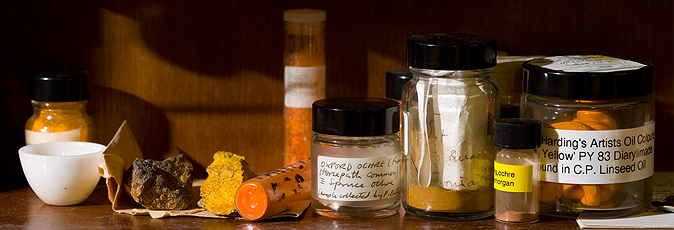
When a painting is being closely studied, or undergoing conservation treatment, modern scientific methods are always important aids. These procedures are carried out in the Gallery's Scientific Department, which contains lots of advanced equipment. Powerful microscopes, and chemical analysis of minute samples of paint, give information on the pigments and media used to create a painting, and the layer structures involved.
X-radiography and infrared reflectography can expose the artist's preliminary workings beneath the paint surface, which often reveals their early thinking.
Read case studies on scientific, conservation and curatorial investigation of paintings at the National Gallery.
New research by National Gallery curators, scientists and conservators is published every year in the National Gallery Technical Bulletin.