Early years
Painter, sculptor, architect, designer, theorist, engineer and scientist, Leonardo da Vinci created some of the most famous images in European art. Though many of his works were never finished, and even fewer have survived, he influenced generations of artists and he continues to be revered as a universal genius.
Leonardo was born near the Tuscan hill-town of Vinci. An illegitimate child, he was raised by his paternal grandfather. His father had a flourishing legal practice in the city of Florence, where Leonardo received his early artistic training with the sculptor Andrea Verrocchio.
Verrocchio's workshop undertook a wide range of commissions including sculpture and decorative metalwork as well as paintings.
Frustrated in Florence
By 1472, Leonardo had joined the brotherhood of Florentine artists, the Compagnia di San Luca, and he worked in Florence for the next ten years, but few paintings survive.
He made numerous drawings, however, which revealed his growing interest in other disciplines, including geometry, anatomy and engineering.
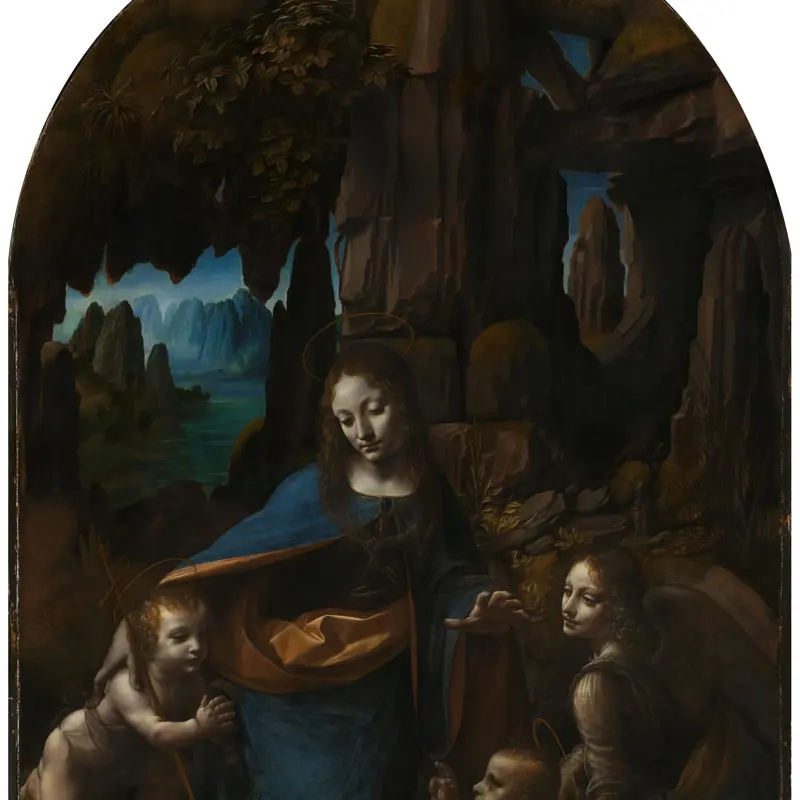
By 1483, Leonardo felt stifled and decided that Milan would offer more exciting opportunities. He wrote to the ruling family, the Sforzas, asking for employment primarily on the grounds that he was an expert in military engineering. He mentioned his skill in painting and sculpture as an added bonus. Soon after his move to Milan, a confraternity commissioned an altarpiece, and Leonardo created 'The Virgin of the Rocks'. When they refused to give what he considered a fair price for the painting, he sold it to someone else in disgust and it was some years before the confraternity could persuade him to do a second version - the one that now hangs in the National Gallery.
The notebooks
Leonardo kept notebooks of his research into science, biology, anatomy, engineering and art. (He was particularly keen on flying machines, and came up with a design for a type of helicopter, although it was never built.)
The books were filled with drawings and diagrams, and covered with notes written in mirror handwriting and he kept them for the rest of his life.
Leonardo's major artistic achievement at this time was his depiction of 'The Last Supper', which he painted for the wall of the refectory of Santa Maria della Grazie. 'The Last Supper' perfectly illustrates Leonardo's belief that poses, gestures and facial expressions should reflect the 'motions of the mind'.
Milan, Rome and France
In 1499 the French army invaded Milan and Leonardo returned to Florence. He was fascinated by the mystery of the face and by the possibility of reading the 'motions of the soul' through facial expressions and gesture. Leonardo's portrait of the wife of a Florentine official, known as the 'Mona Lisa' is famous for its sitter's enigmatic expression.
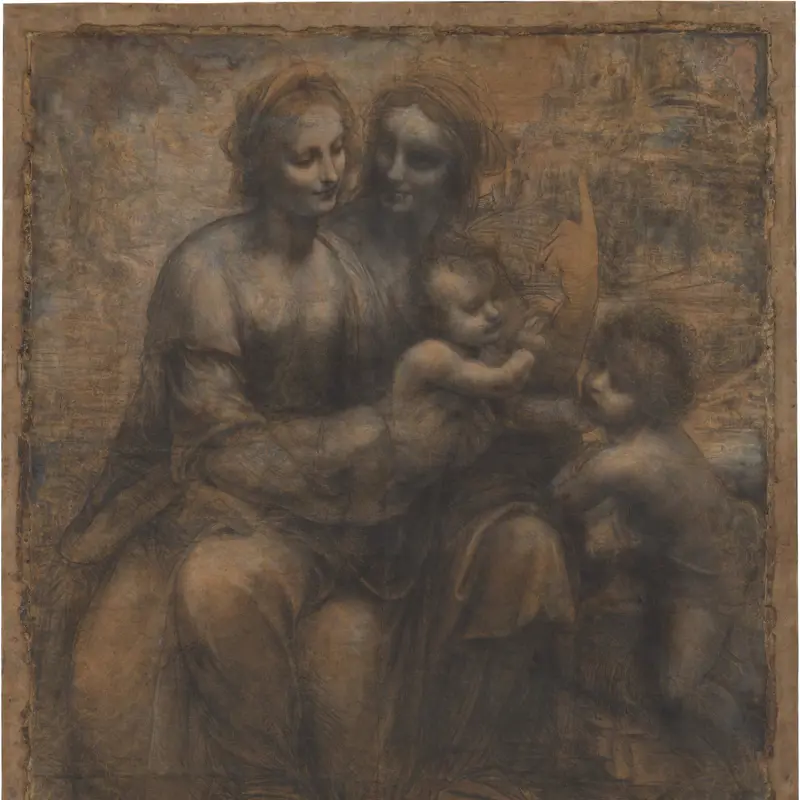
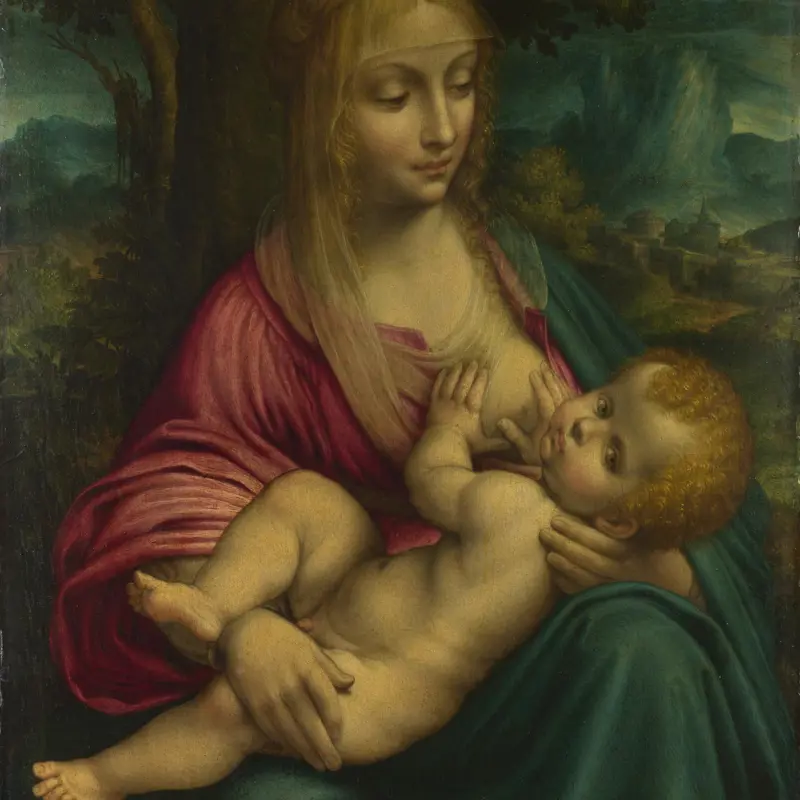
Leonardo soon tired of Florence however, and by the summer of 1508 he was back in Milan, working for the French rulers of the city. He began work on a series of compositions of the Virgin and Child. Before beginning a painting, he would work out his composition in a drawing - the famous Burlington House Cartoon is a preparatory work for a painting now in the Louvre, Paris.
This second period in Milan lasted until 1513 and was followed by three years in Rome. At some point during this period he was brought to the attention of the French king and was offered employment as 'first painter and engineer' at the royal court. Leonardo accepted the offer and in 1517 he moved to the Chateau of Cloux, near Amboise, where he spent the rest of his life.
Final years
Towards the end of his life, Leonardo was plagued by ill-health and a stroke left him paralysed down the right side of his body. Despite this, his notebooks reveal that he was surprisingly active, though it is likely that his assistants carried out most of the physical work. However, his mood deteriorated and he is thought to have been dogged by a persistent and overwhelming sense of pessimism.
He became increasingly obsessed with his experiments and scientific projects. These interfered with his artistic commissions and he became even more notorious for not finishing anything. He completed so few works in his lifetime that a whole industry sprang up around the search for 'real Leonardos' with many pastiches and copies being paraded as originals.
In April 1519 Leonardo, now 67, drew up his will. He left most of his works to his adored pupil and companion, Francesco Melzi. He died later that year and was buried in Amboise.