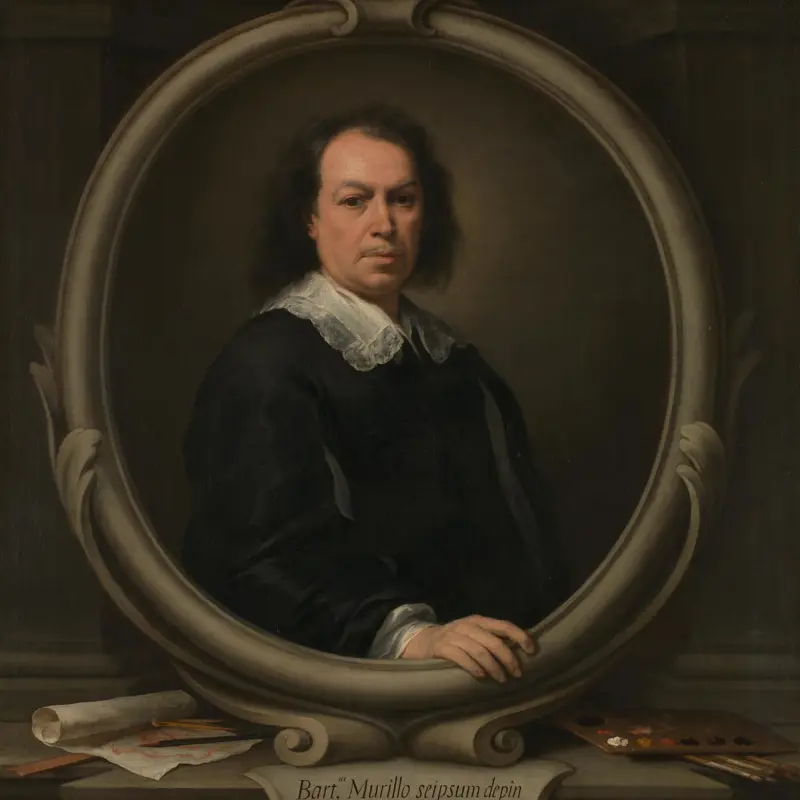

Spain was a global power at the end of the 1500s. The ruling Habsburg dynasty controlled territories across Europe, including parts of present-day Belgium, the Netherlands and all of southern Italy. They had also colonised lands beyond the seas in the Americas and the Philippines.
Exploitation of this vast and diverse empire brought great riches to Spain, ushering in a period of artistic splendour. Spanish artists painted primarily for the monarchy and the Catholic Church. For these powerful patrons, they developed a range of styles characterised by their naturalism and deep religious feeling.
The leading painter of the age was Diego Velázquez. In 1623 he moved from Seville, the hub of Spain’s trade with its far-flung dominions, to Madrid, the seat of imperial power. As painter to Philip IV, who reigned from 1621 to 1665, he developed a sophisticated method of painting using loose, informal brushwork.
Francisco de Zurbarán, working in Seville, specialised in paintings for religious institutions, as did Bartolomé Esteban Murillo, who was also celebrated for his representations of mischievous children. In Naples, the capital of Spanish Italy, Jusepe de Ribera, who had emigrated from Spain, was dominant. His paintings experimented with dramatic, emotional contrasts of light and dark.