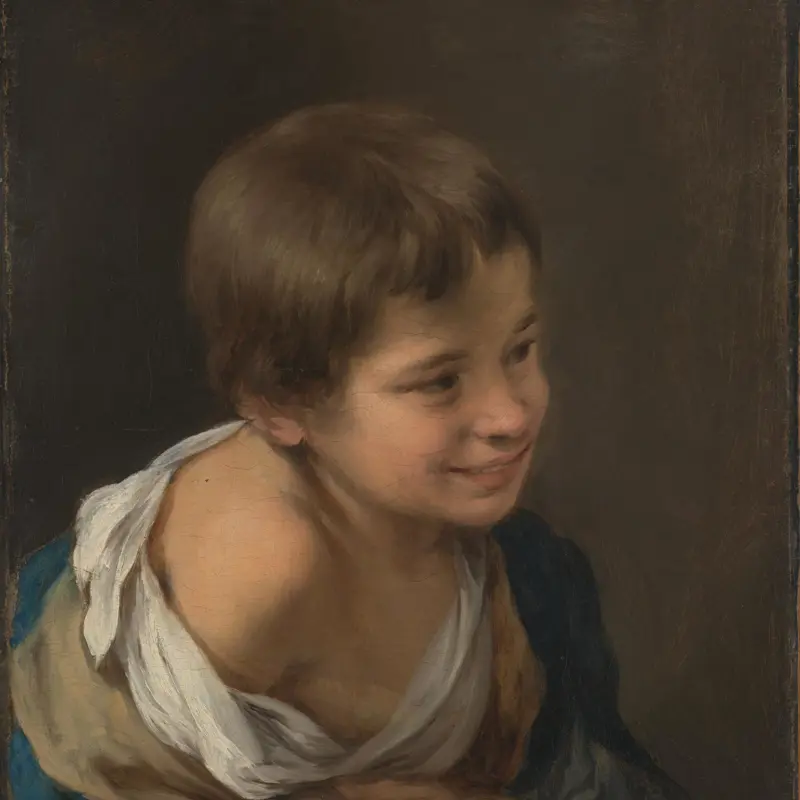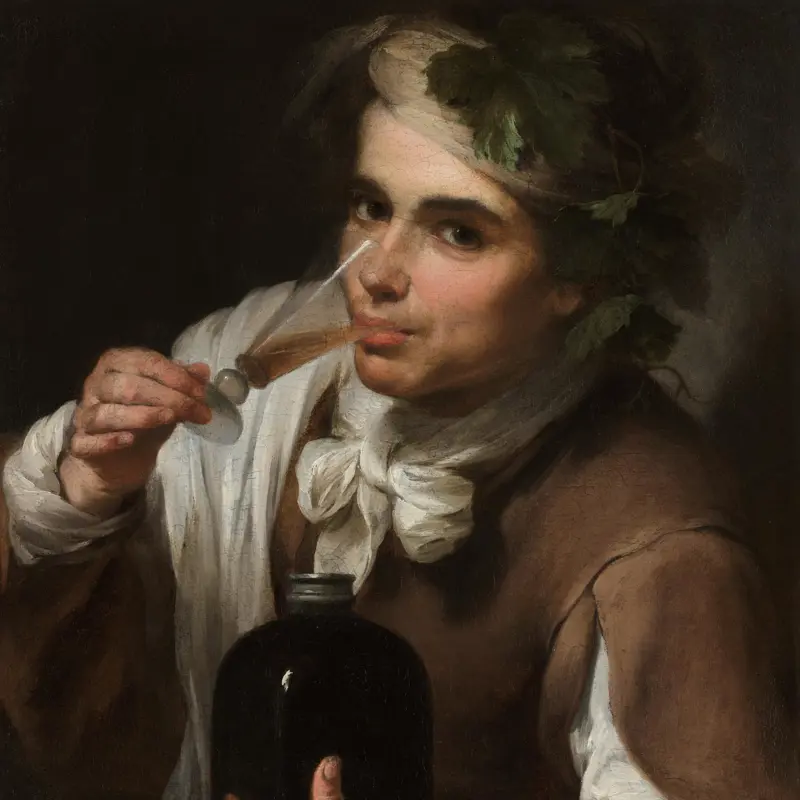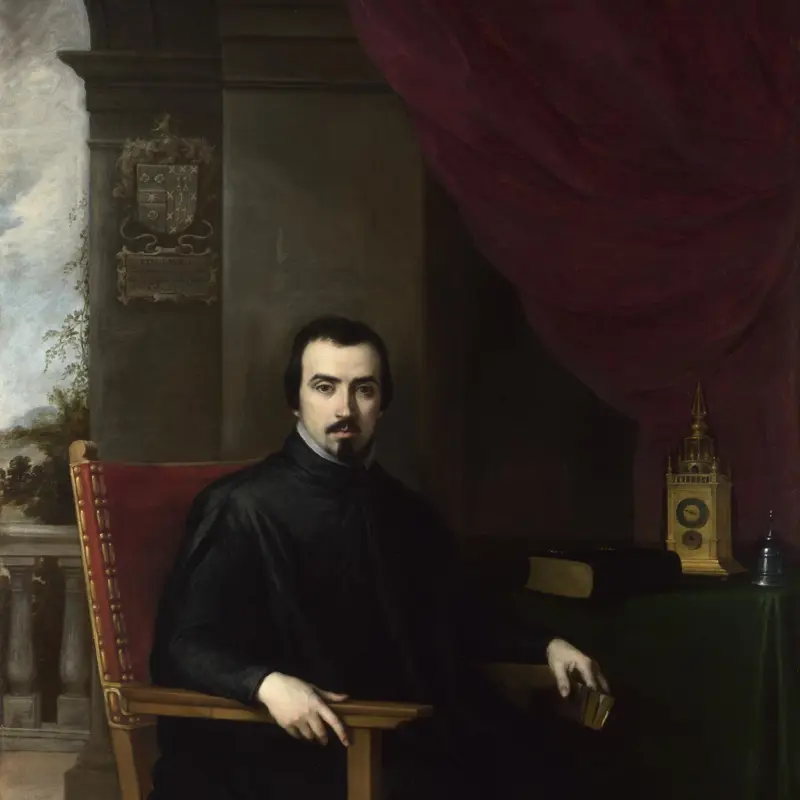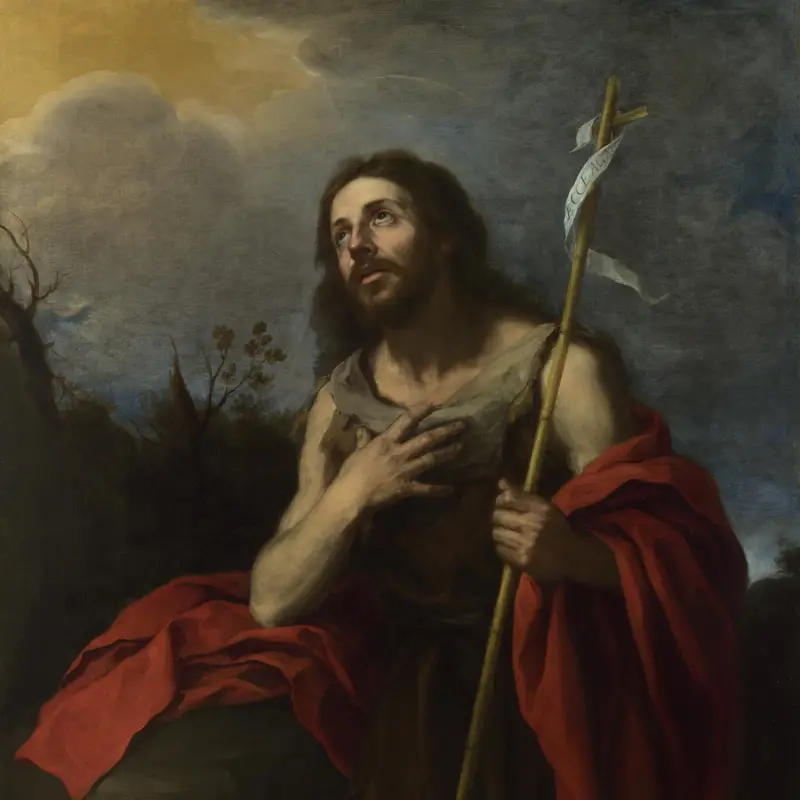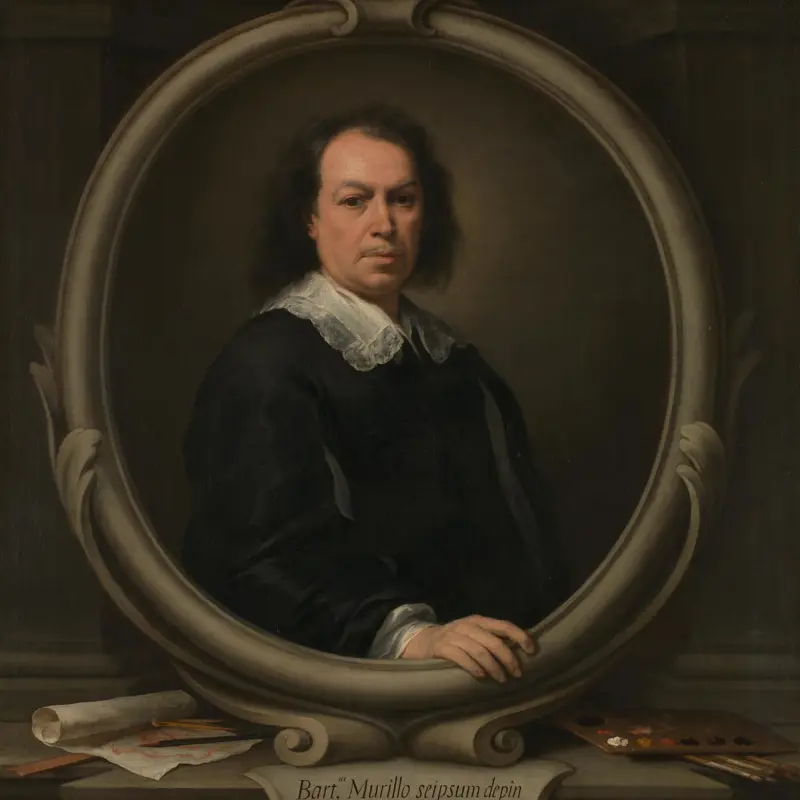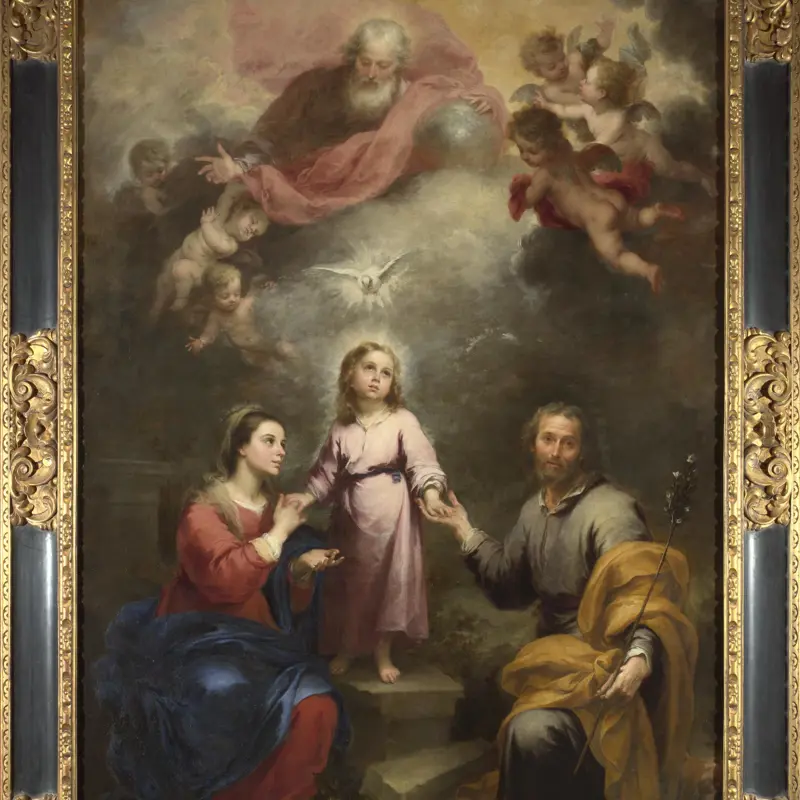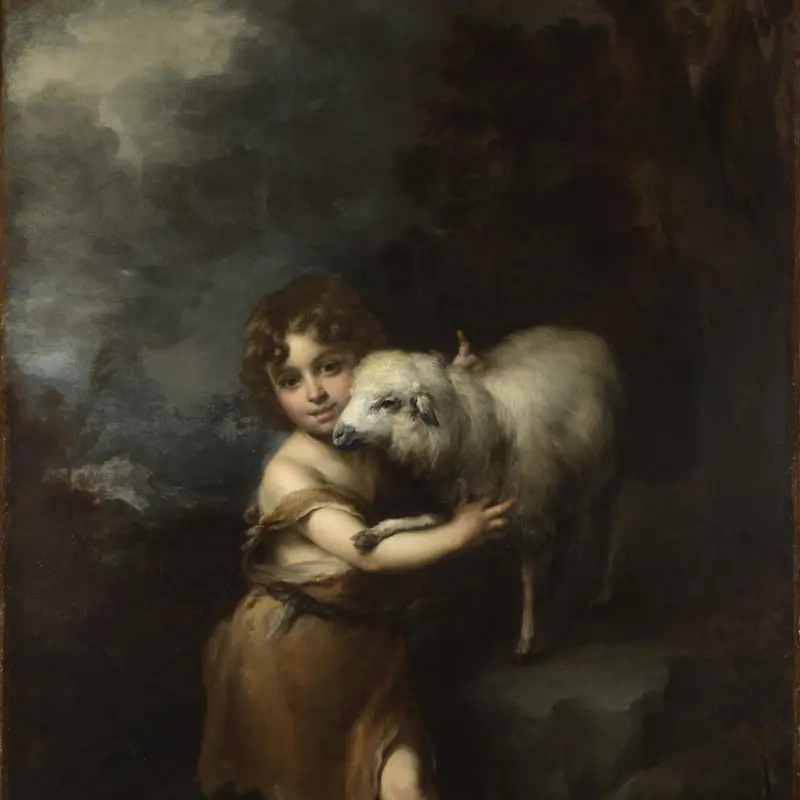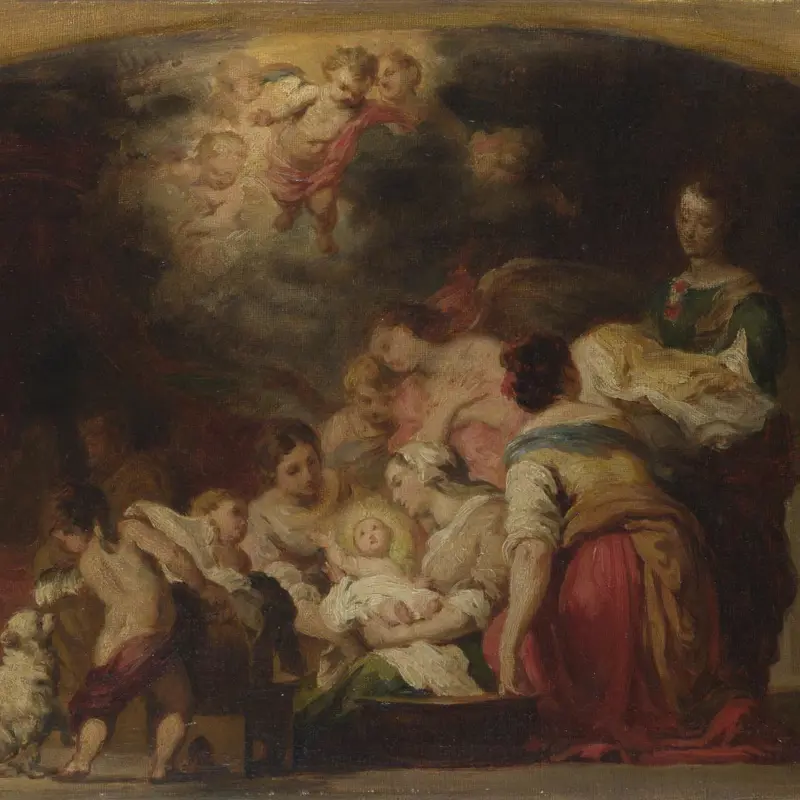
Murillo was the leading painter in Seville in the later 17th century. He remained one of the most admired and popular of all European artists in the 18th and early 19th centuries. His early works were much influenced by the early works of Velázquez, executed before Velázquez left Seville in 1623, and by the paintings of Zurbarán.
Murillo's first famous cycle of paintings was produced for the cloister of the convent of San Francisco in Seville (1645). There followed paintings for the cathedral (1658), and a celebrated series for the church of the Caridad (1667-70), including the National Gallery's 'Christ healing the Paralytic at the Pool of Bethesda'.
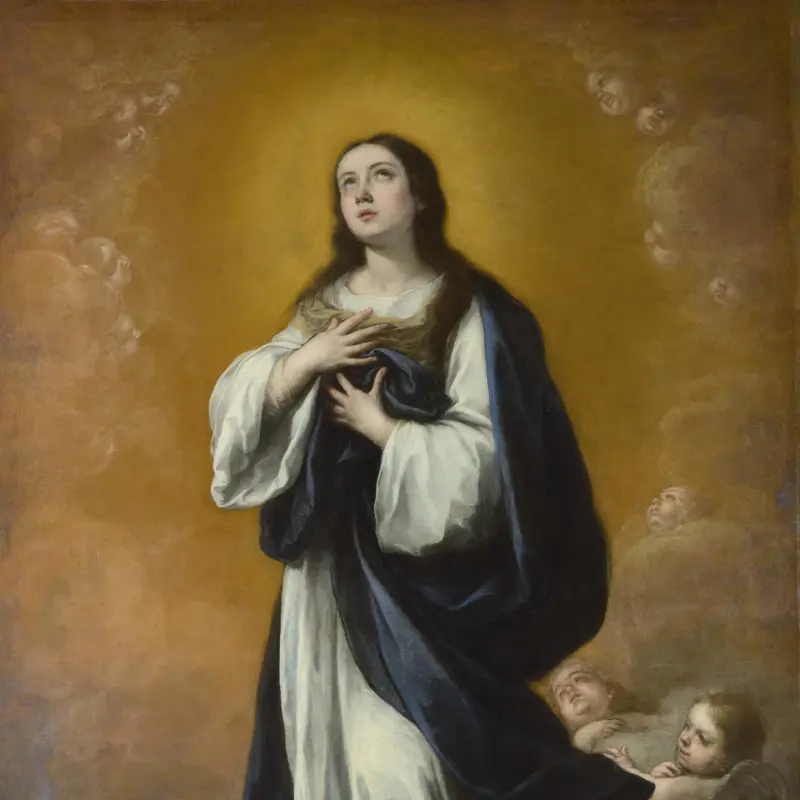
Visits to Madrid (one certainly in 1658) would have made Murillo familiar with works by Rubens and Van Dyck and contemporary Italian painters. His style became increasingly free in its handling, as is apparent in his many well-known representations of the Immaculate Conception.
Bartolomé Esteban Murillo
This person is the subject of ongoing research. We have started by researching their relationship to the enslavement of people.
Biographical notes
Spanish painter.
Slavery connections
Murillo owned five domestically enslaved people during his lifetime including Juana de Santiago, whose son Tomás - described as ‘white of good body and curly hair’ - he freed in 1676, a young Black man named Martín Moreno, whom he sold to Rodrigo Díez de Noreña in 1680, and Sebastián Gómez, although recent research has cast doubt on whether Gómez was of African descent or enslaved.
Abolition connections
No known connections with abolition.
National Gallery painting connections
Painter: Murillo painted NG13, NG74, NG176, NG5931, NG6153, NG6448, NG3910 and NG3938.
Bibliography
Helen Cobby and Rebecca Randle, 'In Depth: A Boy in Seville', Midland Art Papers 4, https://www.birmingham.ac.uk/research/projects/midlands-art-papers/issue-4/in-depth-a-boy-in-seville
Select bibliography
History of Parliament Trust (ed.), The History of Parliament: British Political, Social & Local History, London 1964-, https://www.historyofparliamentonline.org/
Checked and not found
—
Item on publisher's website
C. Matthew et al. (eds), Oxford Dictionary of National Biography, Oxford 1992-, https://www.oxforddnb.com/
Checked and not found
—
Item on publisher's website
M.B. Mena Marqués, 'Murillo, Bartolomé Esteban', in J. Turner et al. (eds), Grove Art Online, Oxford 1998-, https://doi.org/10.1093/gao/9781884446054.article.T060472
Checked and found
—
Item on publisher's website
Luis Méndez Rodríguez, 'Enslaved Artisanal Labor in Seventeenth-Century Spain', in David Pullins and Vanessa K. Valdés, Juan de Pareja: Afro-Hispanic Painter in the Age of Velázquez, New Haven and London, 2023, pp.31-39
Select bibliography
X.F. Salomon and L. Treves, Murillo: The Self-Portraits (exh. cat., The Frick Collection, New York; The National Gallery, London), New York 2017
Select bibliography
UCL Department of History (ed.), Legacies of British Slave-ownership, London 2020, https://www.ucl.ac.uk/lbs/
Checked and not found
—
Item on publisher's website
Works by Bartolomé Esteban Murillo