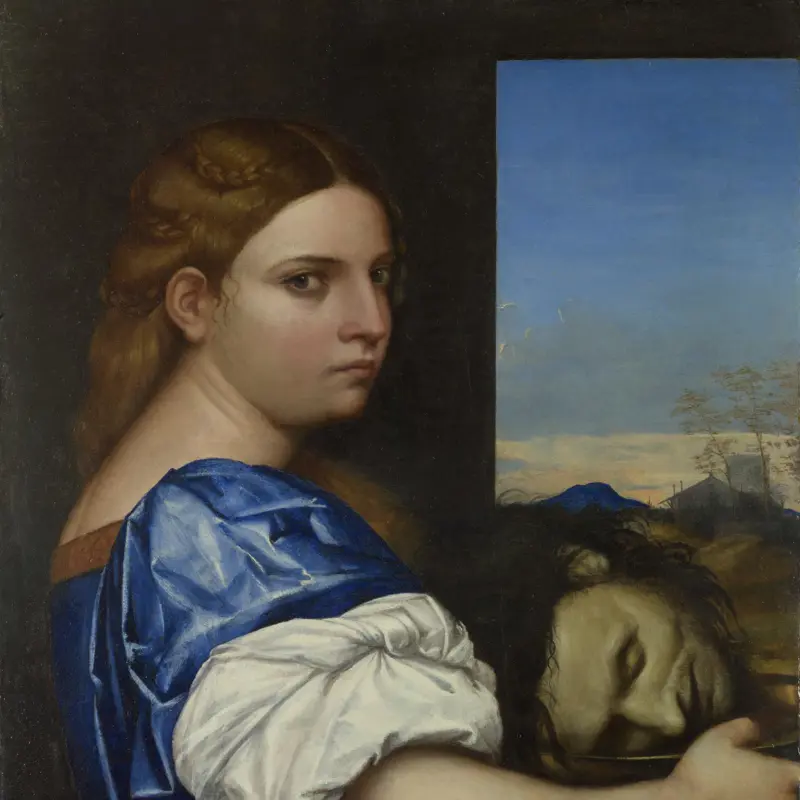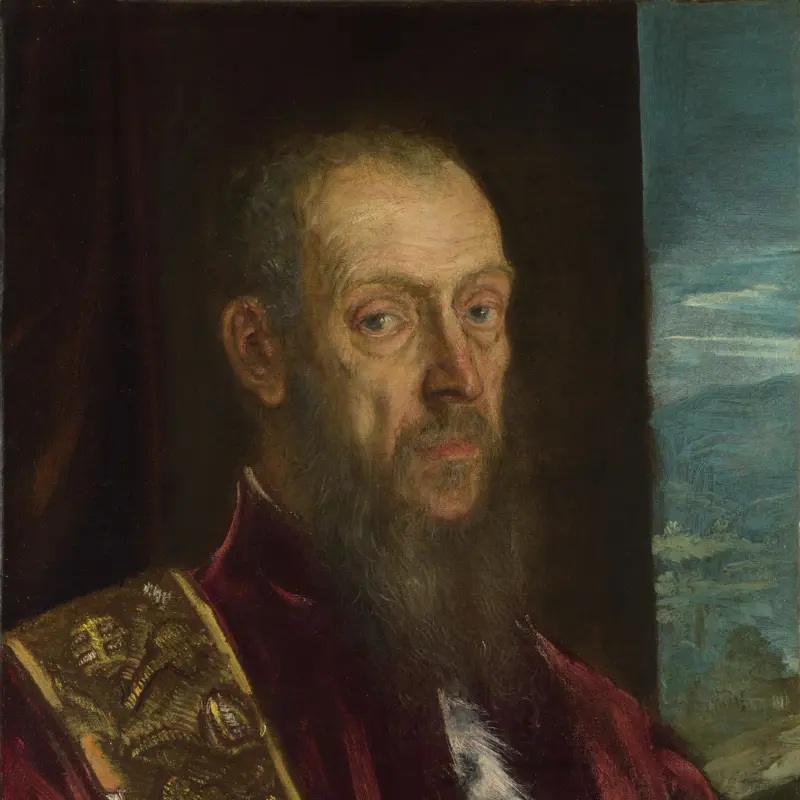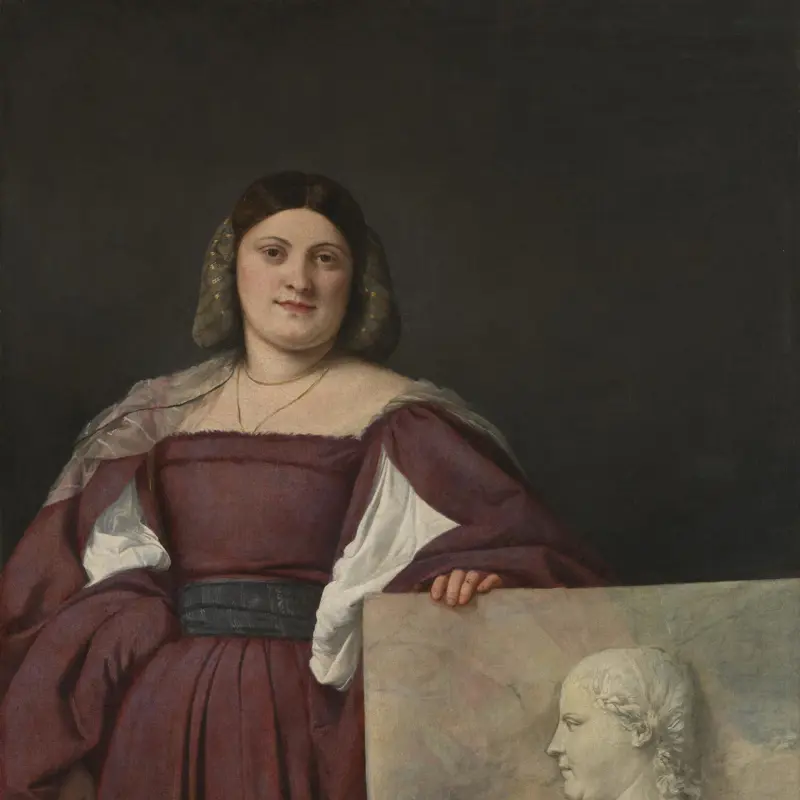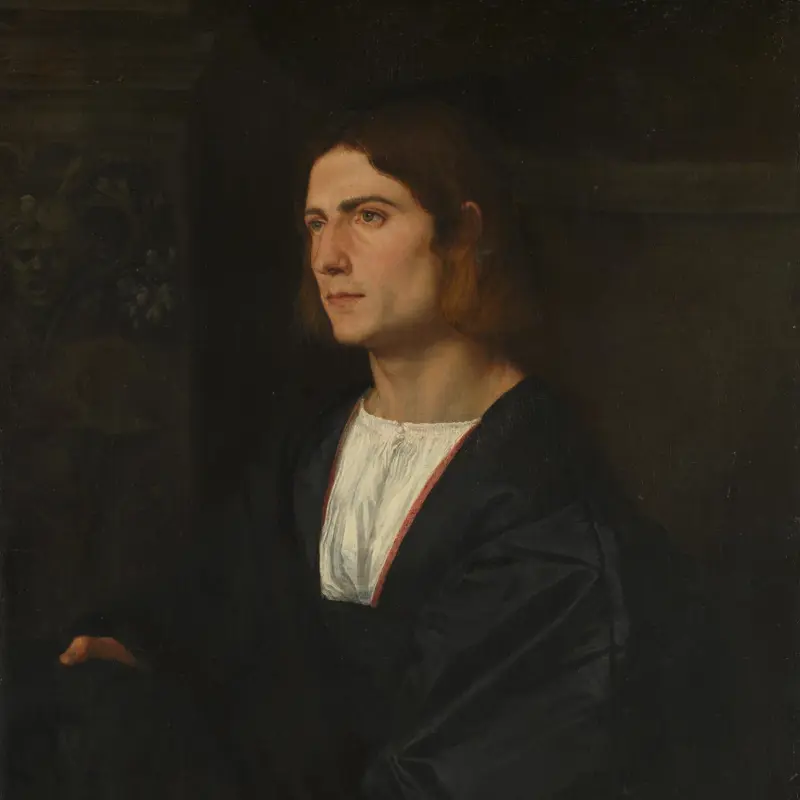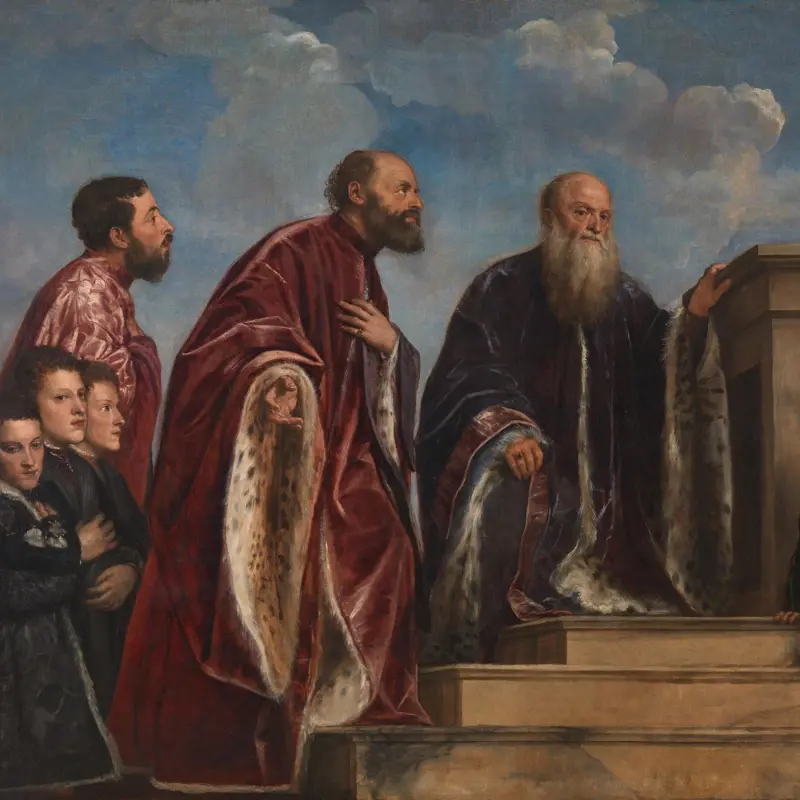

By the 16th century, Venice was the most powerful republic in Europe. A cosmopolitan crossroads, its empire stretched over sea and land. Built on water, the city could not expand beyond its boundaries to proclaim its status. Instead, Venetians displayed their power through precious materials and colour.
Titian was the most influential Venetian artist of this time. Cleverly using subtle tonal transitions to capture the quality of expensive textiles and dyes, he managed to showcase his patrons’ status. He also used his skills to give insights into the personalities of his sitters. Later in the century, Jacopo Tintoretto and Paolo Veronese entered the artistic scene. With their dynamic brushwork and translucent tones, both contributed new ways of applying oil paint to canvas.
Veronese’s works shimmer with splendour. Dressed in fine costumes, his figures gesture elegantly against theatrical backdrops. With dizzying compositions, Tintoretto defied the laws of gravity. Bodies twist energetically in mid-air. Streaks of light and colour flash across the canvas.
Artists of the Venetian mainland (terraferma) combined these developments with local traditions. Girolamo Savoldo found success among Venetian patrons with his life-size saints painted in twilight settings. Jacopo Bassano led a prolific family workshop known for biblical scenes set in idealised rural landscapes.