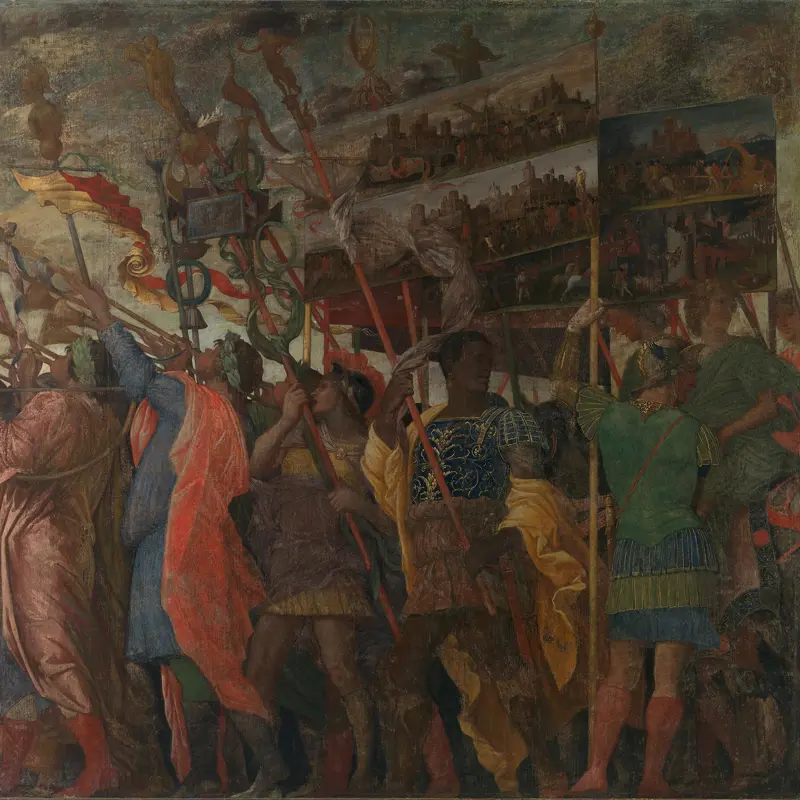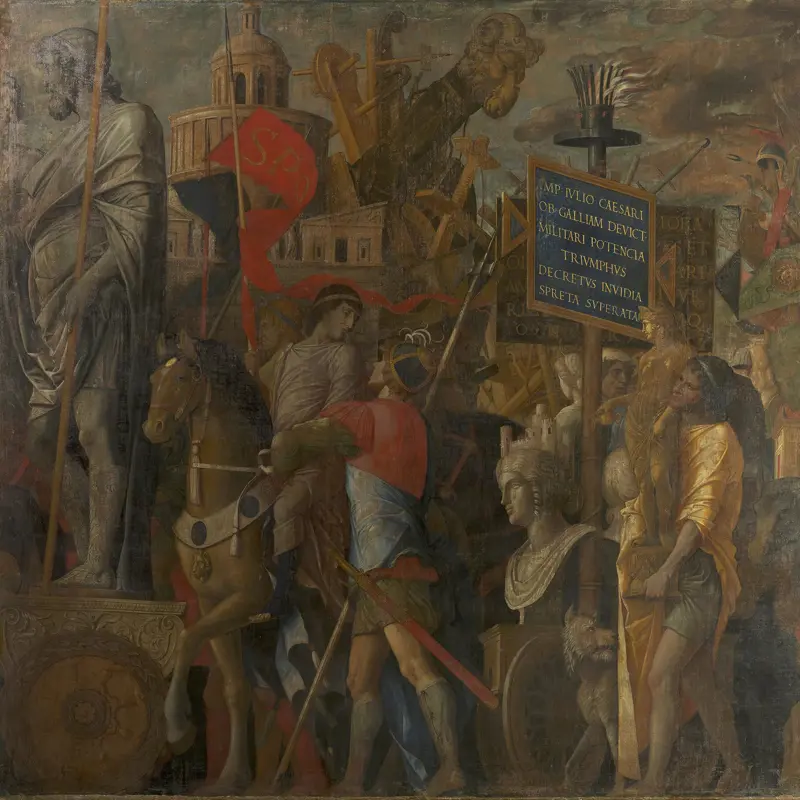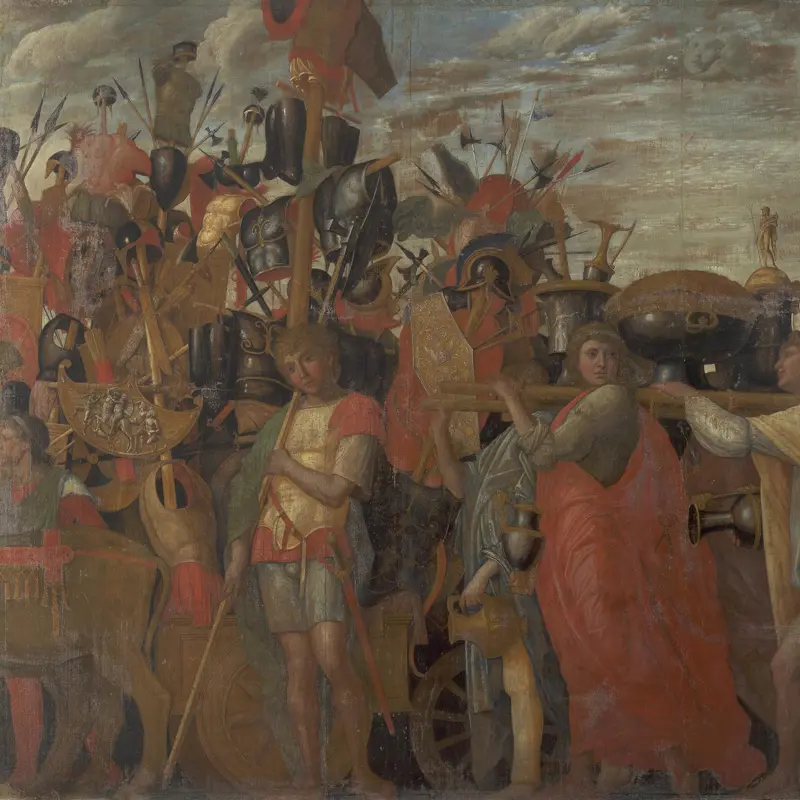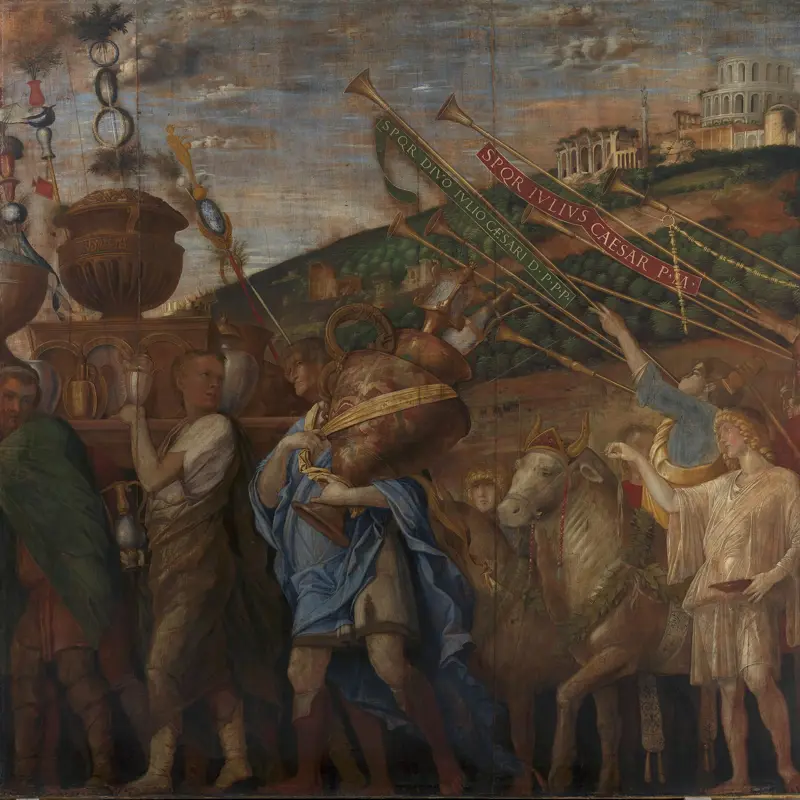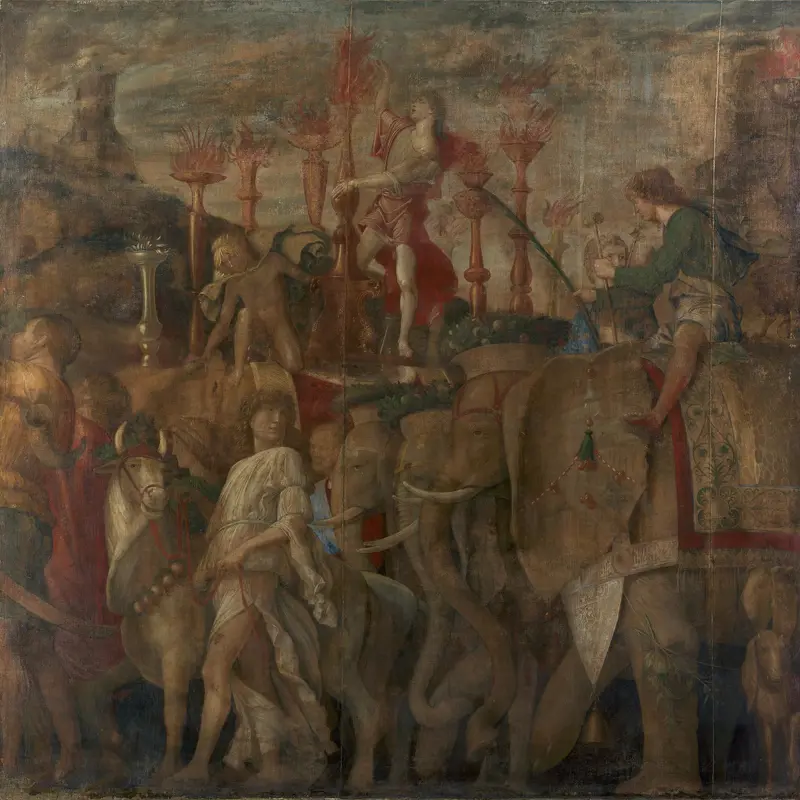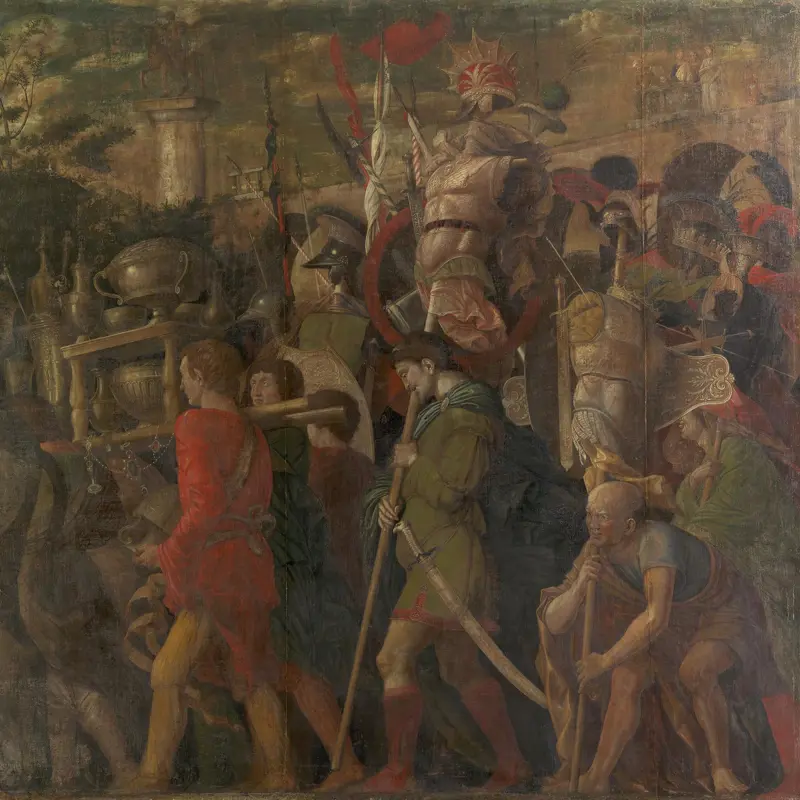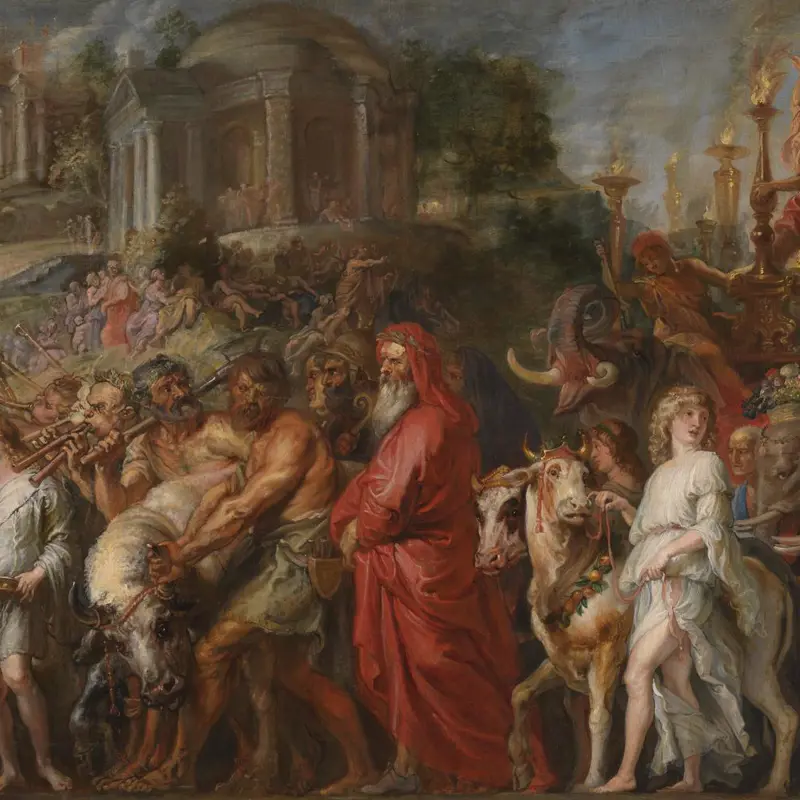

Andrea Mantegna (about 1431–1506) had a lifelong fascination with classical Antiquity. He spent his youth in Padua, surrounded by traces of the city’s ancient past and the growing humanist culture of its university. These interests continued to develop after his appointment as painter to the ruling Gonzaga family in Mantua in 1460.
In the mid-1480s, Mantegna began his most ambitious artistic project: nine large canvases known as The Triumphs of Caesar. The series was probably only completed shortly before the artist’s death in 1506. The Triumphs present a powerful and compelling image of the ancient world. A single unified procession stretches across all nine canvases (six are displayed here), depicting the triumphant return of the Roman general Julius Caesar from his wars in Gaul (58–50 BC), surrounded by the spoils of his victories. Mantegna used a wide range of sources for his paintings. He studied classical texts and ancient monuments, but also referred to contemporary humanist history books and theatrical costumes.
Brought to England in the 1620s by King Charles I, Mantegna’s Triumphs of Caesar form part of the Royal Collection and have been generously lent to the National Gallery by our Royal Patron, His Majesty King Charles III.